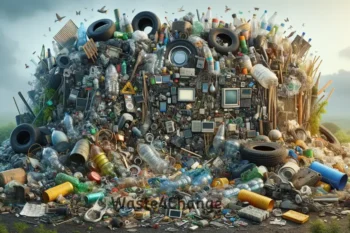
Overcapacity Landfills, Evidence of Ineffective Waste Management in Indonesia?

Indonesia continues to make efforts to address waste and environmental issues. The large population and suboptimal waste management facilities and awareness hinder the progress of this issue. As a result, a significant amount of waste still needs to be managed and ends up in open dumping landfills.
Saka Dwi Hanggara, Campaign Manager of Waste4Change, stated that Indonesia generates approximately 175,000 tons of waste daily. However, only 7.5% is recycled and turned into compost, while the remaining 69% accumulates in landfills, causing overcapacity issues.
Cases of over capacity Landfills in Indonesia
In Indonesia, cases of over-capacity in Final Disposal Sites (TPAs) are numerous. One example of over-capacity Landfills in Indonesia includes Sarimukti Landfill in Bandung, Cipayung Landfill, and Piyungan Landfill. As reported by Kompas.id, as a result of this situation, several landfills were temporarily closed, and operations stopped temporarily. In the case of Piyungan Landfill, Tri Saktiyana, the Assistant to the Secretary of the Economy and Development Department of the Yogyakarta Special Region, suggests that the likely cause of Piyungan Landfil’s full capacity was an error in calculating the amount of waste being disposed of, which should have been 700 tons per day but became 1,000 tons per day. Piyungan Landfill was closed from July 23, 2023, to September 5, 2023.
The issue of TPA overcapacity in Indonesia is not only in Piyungan Landfill. It is known that the same problem often occurs in several other areas. In Bandar Lampung, in January 2023, at least three Landfills were reported to be over capacity. These Landfills include Bakung Landfill, Kota Metro, and Kabupaten Lampung Tengah.
What are the Impacts of Overcapacity in Landfill?

Certainly, the issue of overcapacity in landfills cannot be taken lightly. Many subsequent problems can arise from this situation, such as waste piling up in temporary storage sites, hindered waste transportation and management activities, and the potential for waste management paralysis.
Furthermore, overcapacity in Landfills serves as evidence that a significant amount of waste still needs to be managed. This poses a threat to the environment and worsens the Earth’s condition. For example, the accumulation of organic waste in open spaces and exposure to heat can generate methane gas, which is 20 times more potent than carbon dioxide.
Moreover, full Landfill capacity will have a detrimental impact on health, especially for children and infants. This impacts because children and infants are still in their growth phase, making them more vulnerable to the threats posed by releasing toxins from TPAs. For instance, exposure to toxic substances from accumulated waste can lead to various illnesses in children and infants, such as asthma, permanent disabilities, and psychological and neurological damage.
Landfill, A Solution or Problems?
Considering the issues arising from overcapacity landfills has led many people to question the effectiveness of landfills as the primary solution for waste management. Is it appropriate for landfills to be the direct waste management solution? And how should a TPA be operated?
Elma Elkarim, a Solid Waste Management Consultant from Waste4Change, points out that landfills are a crucial part of the waste management solution. However, the presence of landfills should not automatically be considered the primary solution to address waste management issues.
Saka Dwi Hanggara, Campaign Manager at Waste4Change, concurs with this view. He suggests that landfills should only be one of the solutions, not the primary solution, for waste management issues in Indonesia. He encourages the community to take other waste management measures, such as source reduction and waste processing, before reaching landfills so that only specific non-recyclable waste ends up in landfills.
What are the Solutions to Address the Landfills Waste Issue?
As explained above, the community needs to realize that landfills are only one of the solutions for waste management. The community should actively engage at waste management efforts, such as source reduction and optimal waste sorting and recycling.
Furthermore, addressing the problem of overcapacity landfills is not the responsibility of one party alone. There needs to be synergy and strong cooperation between the government, relevant stakeholders, and the community to address the issue of overcapacity landfills.
Effective Waste Management Policy as One of the Solutions to Landfill Overcapacity
Sound waste management policies are one of the most effective solutions for addressing Indonesia’s waste issues, especially the problem of full landfill capacity. However, the realities on the ground show that effective waste management comes at a cost. Waste4Change is here with the best solutions to address your waste problems, with the aim of realizing the Zero Waste to Landfill vision. Waste4Change is ready to assist you in reducing the amount of waste that ends up in TPAs by providing comprehensive waste management services for institutions, businesses, and individuals. Waste management at Waste4Change is carried out comprehensively and holistically, covering education, campaigns, consultation, transportation, and recycling.
Let’s all take part in addressing Indonesia’s waste issues. Utilize responsible waste transportation and management services, like Reduce Waste to Landfill and Personal Waste Management from Waste4Change, to become a part of the change.
References :
https://pslb3.menlhk.go.id/portal/read/gerakan-pilah-sampah-dari-rumah-resmi-diluncurkan
Read Bahasa Indonesia in here