Banyumas Implements the Best Zero Waste to Landfill in ASEAN. How Do They Manage Waste?
Banyumas has succeeded in becoming the best region in terms of waste management in Indonesia and ASEAN. Supported by the implementation of Zero Waste to Landfill.
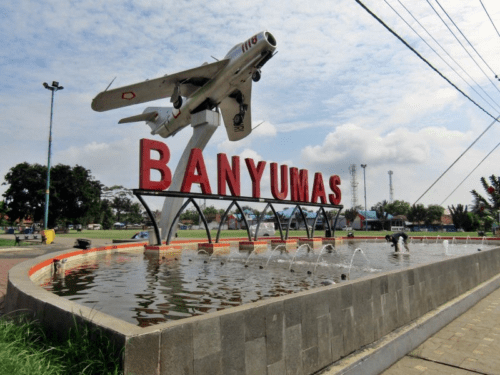
No longer dependent on the existence of landfill, Banyumas will rely on 29 TPST (integrated waste management sites) spread across various regions to manage its daily waste.
At the TPST, the collected waste will later be processed according to its type (organic, inorganic and residue) by Community Self-Help Groups (Kelompok Swadaya Masyarakat).
Zero Waste to Landfill Waste Processing
To maximize waste management according to the Zero Waste to Landfill principle, the Banyumas Regency government provides various necessary supporting facilities.
Some of these facilities include maggot rooms, maggot bioponds, procurement of conveyor machines, organic waste chopping machines, plastic pressing machines, waste sorting machines, 3-wheeled motorbikes, dump trucks, and waste processing facilities. Supported by the PUPR Ministry.
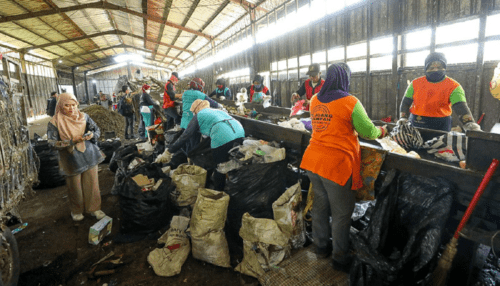
After being sorted, the organic waste will be processed into maggot feed, and the inorganic waste will be chopped up and sold as raw material for products with economic value, like making bricks from plastic waste.
Meanwhile, types of waste that are categorized as challenging to reprocess will be handled using the RDF method. Taking this type of waste also collaborates with other responsible parties.
After that, the collection of residual waste will be processed at the BLE TPA (Environment and Education Based Final Disposal Site), specifically for processing this type of waste.
“Even though there is a TPST, some still have residue. So, the residue goes to the BLE landfill. “This residue is then processed at the BLE landfill,” said Banyumas Regent Achmad Husein, quoted by Mongabay.co.id.
Residual Waste Handling
Built-in 2020 with funding allocation from the PUPR Ministry, the construction of the BLE TPA is aimed at converting residual waste into goods that have added value and consuming waste using a pyrolysis process.
To make this happen, the BLE TPA has installed several tools to process residual waste, from waste selection to destruction. Here are the types:
- Bag Opener
A bag opener is a tool used to sort dirty plastic and dirty organic waste.
- Pre Shredder
A pre shredder or chopping machine is a tool that functions to chop waste with a capacity of up to 30 tons per hour. The results of this tool are in the form of chopped waste with a size of less than 20 cm.
- Tromol Screen
Trommel Screen is a waste sieve with a capacity of 20 tons per hour.
- Chopper and Separator
Having a function similar to a Preshredder, this tool functions to chop and sort waste with a capacity of five tons per hour. The pile of waste that enters this tool will be chopped and grouped into organic and inorganic.
- Pyrolysis atau Mesin Pemusnah Sampah
Pyrolysis functions to destroy waste by burning it. However, burning with this tool is certainly not haphazard. Burning waste with this tool uses 3T, namely temperature, turbulence, time.
It is believed that the Banyumas Regency government has passed the furan and dioxin emission test, which means that the smoke from combustion will not have a negative impact on the health of local residents. Burning with this tool is carried out using diesel fuel and is burned at high temperatures ranging from 700-850 degrees Celsius.
Need Proper Financing Support
Even though Banyumas has succeeded in creating an adequate waste management flow, this activity needs to be supported by proper financing.
With a waste fee of only around Rp. 12 thousand to Rp. 20 thousand, Chairman of KSM Mekar Sari Karang Cegak Village, Sumbang District, Sidik Firmansyah, stated that this figure was still far from covering operational costs.
“Some people pay IDR 12 thousand to IDR 20 thousand. That still not enought,” said Sidik, quoted by Radar Banyumas.
Fortunately, the government has responded to this problem by drafting regent regulations regarding waste processing rates. Head of the Banyumas Regency Environmental Service, Junaidi, hopes that waste management rates can be equally and evenly distributed with this Regent’s Regulation. This is also an answer to the differences in tariffs in each region.
“These KSM friends are complaining that their contributions are not enough. “We are currently drafting the regional regulations,” he explained.
“So that KSM can continue to live. Some still feel that the rates are still low. There is also no similarity between KSM rates. At least in the city area, they are the same. December has big dreams, and no more rubbish will be thrown into the village. “Hopefully, all waste can be handled at KSM,”
He also detailed that later, the waste management tariff would be calculated per cubic meter.
“We are discussing that there is a regent’s regulation that calculates the amount of waste management fees. The waste management tariff will be calculated per cubic meter. So what is the appropriate rate for one family and the number of families? “We are working on that,” he explained.
Based on a statement issued by Mr Junaidi as Head of the Banyumas Regency Environmental Service, this regulation is planned to be completed at the end of 2021.
If this price is still far from covering the operational costs of waste management in Banyumas, what is an appropriate contribution price?